Quotation vs Invoice: Which Document to Send First?
Master your sales process by understanding the quotation vs invoice difference. Learn exactly when to send each document to win clients and get paid faster.
BT
Bizcalc Team
·May 5, 2026
Quick Answer & Key Summary
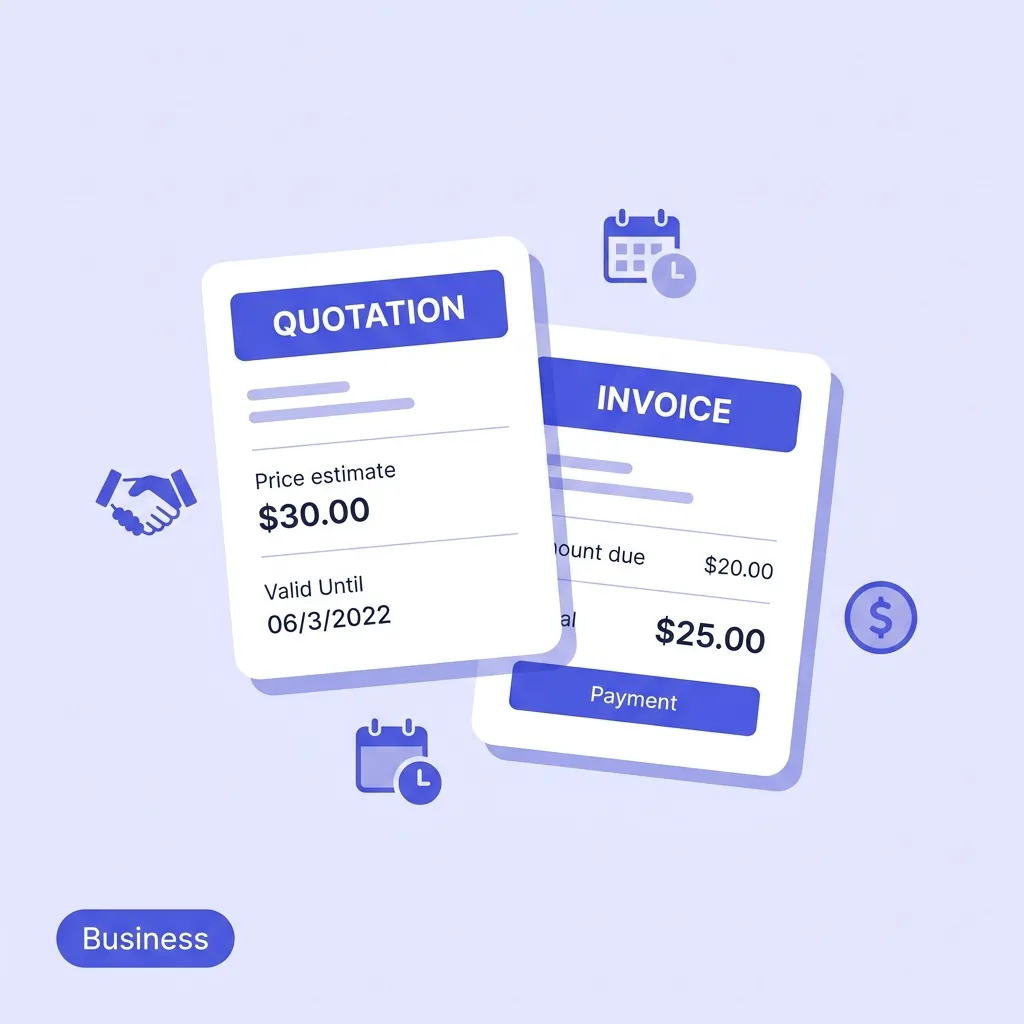
Quick Answer: A quotation is a proposed pricing estimate issued before work begins, subject to client acceptance; an invoice is a formal demand for payment issued after products are delivered or project milestones are achieved.
• Key Formula / Standard:Sales Lifecycle: Quotation (Pre-Agreement Bid) → Work Contracted → Invoice (Post-Delivery Payment Request) • Rule of Thumb / Benchmark: State clear quote validity periods (typically 30 days) to prevent clients from accepting outdated pricing during inflation.
Every successful business relationship begins with clear expectations and ends with prompt payment. The two documents that bookend this process are the quotation and the invoice.
For new service providers, freelancers, and B2B vendors, the quotation vs invoice timeline can initially seem confusing. Sending an invoice when a client expects a quote can make you look aggressive; sending a quote when a client is ready to pay can delay your cash flow.
In this guide, we will clarify exactly what each document is, how they differ, and the precise chronological order in which they should be sent.
📋
Free Quote Generator
Create a professional, fixed-price quotation with a valid-until date and line-item breakdown — formatted as a PDF, ready to send in minutes.
A quotation (often simply called a "quote") is a formal document provided by a seller to a potential buyer, estimating the cost of goods or services before any work begins.
A quote is essentially an offer of sale. It tells the client: "If you hire us to do this specific scope of work, here is exactly what it will cost."
Unlike rough estimates, which are subject to change, a formal quotation represents a fixed price. Once the client reviews the quotation and formally accepts it (usually by signing it or sending a Purchase Order in response), it becomes a legally binding agreement.
Key Elements of a Quotation
To be professional and protect your business, a quote must include:
The word "Quotation" or "Quote" clearly stated at the top
A unique Quote Number for easy reference
Valid Until Date: (Crucial! Prices shouldn't be valid forever)
Your business details and the prospective client's details
A detailed breakdown of the proposed goods or services
The total estimated cost, including taxes
Proposed terms and conditions (e.g., timeline, deposit requirements)
If you are negotiating with a new client, you can create a professional, binding offer using our Free Quote Generator.
What is an Invoice?
An invoice is a commercial document issued by a seller to a buyer after the goods have been delivered or the services have been rendered. It serves as a formal request for payment.
While the quote is an offer, the invoice is a demand for payment.
When you issue an invoice, you are officially logging the transaction in your accounting books as an "Account Receivable." The invoice signifies that you have fulfilled your end of the agreement and the client is now legally obligated to fulfill theirs.
Key Elements of an Invoice
An invoice must include:
The word "Invoice" clearly stated
A unique Invoice Number
The Date of Issue and the Due Date
A reference to the original Quote Number or Purchase Order
A line-item list of the exact goods/services provided
The Total Amount Due
Clear payment instructions (e.g., Bank details, Payment portal link)
When the work is done and it's time to get paid, you can generate a professional bill using our Free Invoice Generator.
Quotation vs Invoice: The Key Differences
To understand which document to send, it helps to view their differences side-by-side.
Feature
Quotation
Invoice
Primary Purpose
To offer a price for proposed work.
To demand payment for completed work.
When is it sent?
First.Before the work begins.
Second.After the work is completed.
Legal Status
An offer. Becomes a contract if accepted.
A bill. Represents a legal debt owed to you.
Accounting Impact
None. Does not affect your books.
Creates Accounts Receivable (money owed to you).
Action Required
The client must Approve or Reject.
The client must Pay.
The Chronological Sales Workflow
Understanding the quotation vs invoice difference is easiest when you map out the chronological timeline of a standard business transaction. Here is the step-by-step document flow:
1. The Inquiry
The client contacts you requesting a price for a specific service or bulk order of products.
2. The Quotation (Sent First)
You evaluate the request, calculate your costs, and send a Quotation. This outlines exactly what you will do and how much it will cost.
Tool: Quote Generator
3. The Acceptance
The client reviews the quote. If they are happy with the price, they formally accept it. In B2B transactions, they may reply with a Purchase Order.
4. The Fulfillment
You perform the service, build the product, or ship the goods.
5. The Invoice (Sent Second)
Once the job is done, you send the Invoice. The prices on the invoice should perfectly match the prices you originally offered in the quotation (unless the scope of work was officially changed).
Tool: Invoice Generator
6. The Receipt (Sent Last)
The client pays the invoice. You then send a Receipt to acknowledge that the payment has cleared and the transaction is complete.
Pro Forma Invoices: The Middle Ground
In some industries, particularly international trade, you might encounter a document that sits between a quote and a standard invoice: the Pro Forma Invoice.
A pro forma invoice is essentially a highly detailed quotation formatted to look exactly like an invoice. It is often used when a buyer needs to pay a deposit, secure financing, or arrange customs clearance before the goods actually ship.
If your client asks for an invoice so they can pay you in advance, but you haven't actually delivered the goods yet, a Pro Forma Invoice is the correct document to send.
🌐
Free Pro Forma Invoice Generator
Create a detailed pro forma invoice for deposits, advance payments, or customs clearance — all in a professional PDF format, no account required.
What is the difference between a quote and an invoice?
A quote is a proposed price sent to a client before they agree to the work. An invoice is a bill sent to the client after the work is completed or goods are delivered.
Can I use an invoice instead of a quote?
No, you should never send an invoice before a client has agreed to your pricing and terms, as an invoice represents a legal demand for payment for finalized work.
Is a quotation legally binding?
A quotation is generally not legally binding until the client formally accepts it (often by signing it or replying 'approved' via email).
How long should a quote be valid for?
It is standard practice to make a quote valid for 14 to 30 days. This protects you if your material or labor costs suddenly increase before the client decides to proceed.
Can an invoice amount be different from the quote?
Ideally, no. If the scope of work changes during the project, you should issue a 'change order' or a revised quote to get the client's approval before adding the new costs to the final invoice.
#quotation vs invoice#quote vs invoice#what is a quote#when to send an invoice#sales process