How Inflation Affects Your Business and How to Adjust Your Prices
Understand how inflation impacts small businesses. Learn cost auditing, margin management, and pricing strategies to protect your bottom line.
BT
Bizcalc Team
·June 17, 2026
Quick Answer & Key Summary
Quick Answer: Inflation erodes small business purchasing power by driving up wholesale inventory costs, utility rates, and commercial wages, compressing operating margins unless prices and procurement contracts are dynamically adjusted.
• Key Formula / Standard:Real Margin = Nominal Margin − Annual Inflation Rate • Rule of Thumb / Benchmark: Review pricing models semi-annually if core consumer price index (CPI) inflation exceeds 3.0% annually.
Economic stability is a variable over which business operators have little direct control. Among the various macroeconomic shifts that can disrupt operations, a general increase in prices presents a persistent challenge. When the purchasing power of currency declines, the consequences ripple through every level of an enterprise, affecting supply chains, payroll, overheads, and customer behavior.
For small operations, the pressure is particularly intense. Large corporations often possess the scale to absorb temporary losses, renegotiate massive supplier contracts, or access cheap capital markets. Conversely, independent firms operate with tighter capital constraints, making them highly vulnerable to sudden shifts in operating costs. Protecting the bottom line during periods of rising prices requires active financial management and strategic pricing decisions.
Understanding how does inflation affect small business profitability is essential to developing a resilient operational strategy. Rather than hoping that rising costs will subside, proactive managers audit their financial statements, model the impact of eroding currency values, and make calculated adjustments to their pricing structures to preserve liquidity and margin health.
🎈
Inflation Calculator
Input historical costs and adjust for annual currency devaluation to determine the current real value of your business expenses.
The Transmission Channels: How Inflation Erodes Your Business
Inflation is not a single event; it is a cumulative process that impacts a business through multiple distinct channels. To manage its effects, you must identify where cost increases are entering your operations.
1. Rising Cost of Goods Sold (COGS)
For businesses selling physical products, the first point of impact is usually the supply chain. Raw materials, packaging, and finished inventory become more expensive as suppliers pass their own rising costs down the line.
Wholesale Price Hikes: Suppliers raise prices to protect their margins, meaning each order of inventory drains more cash from your accounts.
Logistics and Freight Charges: Transportation costs rise alongside fuel prices, increasing the landing cost of every item you receive.
2. Escalating Operating Expenses (OPEX)
Beyond direct production inputs, overhead costs rise steadily during inflationary periods.
Facility Leases: Many commercial leases include clauses that tie annual rent increases to national price indexes, such as the Consumer Price Index (CPI) or Retail Price Index (RPI).
Utility Bills: Commercial electricity, gas, water, and fuel costs often experience rapid increases during broader economic inflationary cycles.
Software and Services: Monthly subscriptions for software-as-a-service (SaaS) tools, accounting services, legal support, and insurance premiums rise as service providers adjust their rates.
3. Payroll and Labor Cost Pressures
As the cost of living increases, employees face reduced purchasing power. This creates upward pressure on wages.
Cost-of-Living Adjustments: Employees require higher wages just to maintain their standard of living, raising your total cost of employment.
Retention Challenges: If your business cannot offer competitive salary adjustments, you risk losing skilled staff to competitors, leading to expensive recruitment and training cycles. The true impact of these changes can be modeled using the Hiring Cost Calculator to evaluate the capital requirements of staff replacement.
4. Working Capital Expansion
As costs rise, the absolute amount of cash required to maintain normal operations increases. Replacing $10,000 worth of stock now requires $11,500. This means more of your cash is locked up in inventory and accounts receivable, reducing your liquid capital buffer.
The Critical Difference: Nominal vs. Real Profitability
A common error in financial analysis is confusing nominal numbers with real values. During periods of price instability, this mistake can lead to a false sense of security.
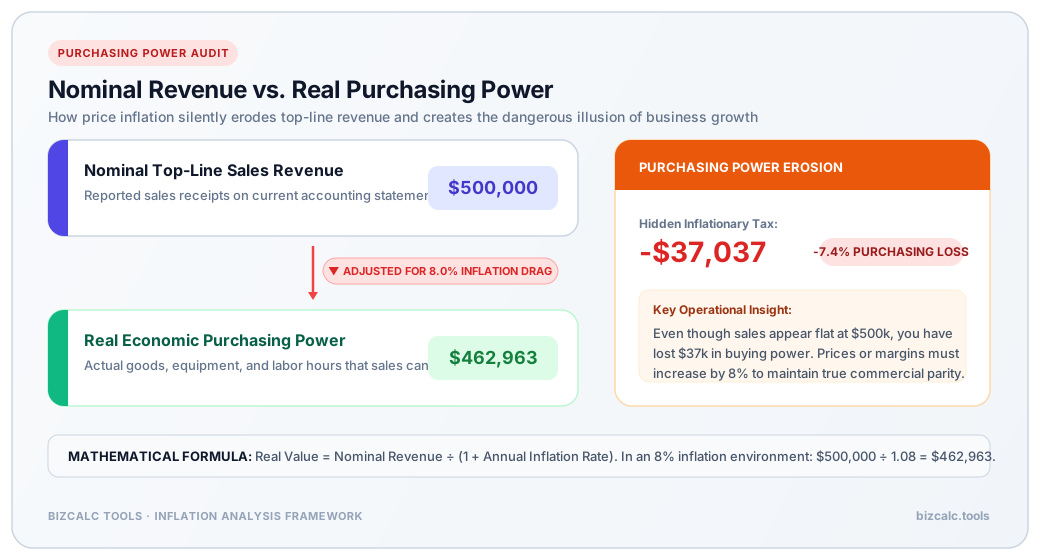
Nominal profitability is the raw currency amount shown on your financial statements. Real profitability is that value adjusted for the eroding effects of inflation. If your business generates $100,000 in net profit this year compared to $95,000 last year, you show a nominal profit increase of 5%. However, if the annual inflation rate is 8%, the real purchasing power of that profit has actually declined.
You can use the Inflation Calculator to adjust historical revenue and expense figures to see how your current earnings compare to past baselines in real terms.
If your real profit is declining while your nominal profit rises, your business is slowly losing the ability to reinvest in equipment, pay competitive wages, and distribute returns to owners. Maintaining a constant gross profit margin percentage—rather than a fixed dollar markup—is essential to ensuring that your revenues scale alongside inflation.
Formulating an Inflation Pricing Strategy
When faced with rising expenses, business managers must decide how to adjust their prices. Simply absorbing the costs is rarely sustainable. You must choose a pricing framework that fits your market positioning.
1. Cost-Plus Pricing Adjustments
The cost-plus method is the most straightforward pricing strategy. You determine the exact cost of producing a product or delivering a service and add a set percentage markup to establish the selling price.
The Adjustment: When your COGS rises, you apply your standard markup percentage to the new, higher cost.
Example: If a product cost $50 to produce and you used a 50% markup, the selling price was $75 (generating a 33.3% profit margin). If the production cost rises to $60, applying the same 50% markup sets the new price at $90.
Benefit: This ensures that your gross margin percentage remains stable, preventing cost erosion from eating into your profits. To calculate the exact numbers, use the Markup Calculator to evaluate how changes in cost impact markup and margin relationships.
2. Value-Based Pricing
Value-based pricing sets prices based on the perceived value of your offer to the customer, rather than the cost of production. During inflation, this strategy is highly resilient.
The Adjustment: Instead of focusing on cost increases, you emphasize the quality, reliability, or unique features of your product. You can introduce premium tiers or highlight how your solution saves customers money in other areas (such as efficiency or durability).
Benefit: Customers are less price-sensitive when they perceive high unique value, allowing you to raise prices without facing proportional drops in sales volume.
3. Product and Service Re-engineering (Value Engineering)
If raising the retail price is impossible due to strict competitor constraints or highly sensitive customer demand, you can adjust the product or service itself.
Material Substitution: Switch to more cost-effective raw materials or modify packaging designs to reduce shipping weight and volume.
Product Sizing (Shrinkflation): Reduce the volume or weight of a product slightly while keeping the price constant. For example, a food distributor might package 900 grams of a product instead of 1 kilogram.
Service Bundling and Unbundling: Separate additional services (such as delivery, installation, or extended warranties) from the core product and charge for them separately. This allows you to keep the baseline price competitive while generating additional revenue to cover rising expenses.
🎈
Inflation Calculator
Analyze the compound effects of multi-year price increases on your operational overheads.
Raising prices is a delicate process. If done carelessly, you risk alienating loyal customers and losing market share. Follow this step-by-step framework to implement a structured, defensible price adjustment.
Step 1: Conduct a Detailed Cost Audit
Do not estimate your cost increases. Review vendor invoices, payroll registries, and utility statements to calculate the exact change in your expense base.
Separate Fixed and Variable Costs: Variable costs (COGS, merchant fees, shipping) impact your unit margins directly. Fixed costs (rent, salaries, insurance) impact your total overhead load.
Identify the Core Cost Drivers: Determine which specific inputs are driving your expense increases (e.g., a 15% rise in raw plastics or a 20% spike in shipping container rates).
Step 2: Calculate Current and Target Margins
Assess your current profitability to establish a baseline.
Gross Profit Margin = (Revenue - COGS) / Revenue
Use the Profit Margin Calculator to find your current margin percentages. If your margins have dropped compared to historical averages, calculate the target margins required to restore your business's financial health.
Step 3: Run a Break-Even Sensitivity Analysis
Before changing your prices, understand how your sales volume can change before your total profitability is harmed. If you raise prices, you may lose some customers. You must know your "margin of safety."
If you raise prices by 10%, how many customers can you lose before your net profit is lower than it was at the old price?
Use the Break-Even Calculator to find your new break-even point in units and sales volume based on adjusted costs and prices.
Step 4: Model the Price Adjustment
Model your pricing using the Pricing Strategy Calculator to evaluate how different combinations of cost, markup, and volume affect your net return.
Pricing Option
Baseline Price
Adjusted Option A (Cost-Plus)
Adjusted Option B (Value Premium)
Unit Production Cost
$40.00
$46.00 (up 15%)
$46.00 (up 15%)
Markup Percentage
50.00%
50.00%
63.04% (increased value)
Selling Price
$60.00
$69.00
$75.00
Gross Margin %
33.33%
33.33%
38.67%
Unit Profit Dollar
$20.00
$23.00
$29.00
Modeling these options helps you see the trade-offs between pricing aggression and volume risk.
Step 5: Implement a Professional Communication Strategy
How you communicate a price increase determines how customers receive it.
Give Advance Notice: Provide key accounts or recurring clients with 30 to 60 days of notice before prices change. This shows respect for their budgets and builds trust.
Focus on Value, Not Just Costs: Avoid writing emails that focus entirely on inflation. Instead, explain how the price adjustment allows you to maintain the quality of your products, invest in better customer service, or ensure supply chain reliability.
Honesty and Transparency: State clearly that your input costs have risen. Customers experience inflation in their own lives and generally understand that businesses must adjust to survive.
Practical Case Study: Inflation Margin Impact
To see the math of cost erosion in action, let's examine a small service and distribution business before and after a period of high inflation.
This business starts with annual revenues of $300,000. It has a COGS of $120,000 and fixed operating overheads of $130,000, leaving a net profit of $50,000. The economy experiences a 10% inflation wave, raising all costs. The table below shows what happens if the business fails to adjust its prices, compared to implementing a calculated 10% price increase.
Inflation Impact and Pricing Correction Model
Financial Metric
Baseline State
Inflation (No Price Adjustment)
Inflation (Calculated Price Adjustment)
Annual Revenue
$300,000
$300,000
$330,000 (up 10%)
Cost of Goods Sold (COGS)
$120,000
$132,000 (up 10%)
$132,000
Gross Profit Margin
$180,000 (60.0%)
$168,000 (56.0%)
$198,000 (60.0%)
Operating Expenses (OPEX)
$130,000
$143,000 (up 10%)
$143,000
Net Profit (Nominal)
$50,000
$25,000
$55,000
Profit Margin %
16.67%
8.33%
16.67%
Real Profit Value (Inflation Adjusted)
$50,000
$22,727
$50,000
Analysis of the Case Study
The numbers highlight the danger of inaction during periods of rising prices:
Margin Erosion: When costs rise by 10% and prices remain static, the gross profit margin percentage drops from 60% to 56%.
The Profit Squeeze: Because fixed operating costs also rise by 10% (from $130,000 to $143,000), the net profit is cut in half, dropping from $50,000 to $25,000.
The Real Value Wipeout: When adjusted for inflation, the real value of the $25,000 profit drops to just $22,727. In real terms, the business owner's return has declined by more than 54%.
The Restoration: By implementing a 10% price adjustment, the business maintains its 60% gross profit margin. Nominal net profit rises to $55,000, which preserves the original real purchasing power of $50,000.
This case study shows that price adjustments during inflation are not about increasing your wealth at the expense of customers; they are about preserving the baseline viability of your business.
Operational Actions to Mitigate Inflation
Adjusting prices is a powerful tool, but it is not the only way to manage inflation. You can also implement operational changes to improve efficiency and reduce cost pressures.
1. Supply Chain and Inventory Adjustments
Consolidate Orders for Volume Discounts: If you have the cash reserves, purchase inventory in larger quantities to secure bulk discounts. This helps lock in current prices before future supplier increases occur.
Source Alternative Suppliers: Avoid relying on a single vendor. Research and negotiate with multiple local and international suppliers to secure competitive rates.
Optimize Inventory Turnover: Do not let expensive stock sit on shelves. Focus on high-demand items and reduce holdings of slow-moving goods to free up cash.
2. Operational Automation and Efficiency
Automate Repetitive Tasks: Implement software tools to automate invoicing, scheduling, customer support, and inventory tracking. This helps control administrative labor costs.
Optimize Energy and Utilities Usage: Invest in energy-efficient equipment, adjust lighting and heating schedules, and renegotiate commercial utility contracts to manage overhead costs.
Audit Subscriptions and Overhead: Conduct a monthly review of all software licenses, services, and insurance policies. Cancel unused tools and renegotiate premiums to reduce fixed expenses.
3. Manage Working Capital and Cash Flow
Accelerate Accounts Receivable: Bill customers immediately and follow up on late payments promptly. Consider offering small discounts for early payment to improve cash inflows.
Extend Accounts Payable strategically: Negotiate longer payment terms with suppliers (such as shifting from Net 30 to Net 45 or Net 60) to keep cash in your bank account longer.
Monitor Your Burn Rate: Keep close track of your cash runway. Use the Burn Rate Calculator to ensure you maintain sufficient cash reserves to handle seasonal sales drops.
Inflation Management Checklist for Small Businesses
Use this checklist to audit your costs, review your margins, and implement pricing adjustments:
Audit vendor invoices from the past 12 months to calculate the exact inflation rate for your core raw materials.
Re-evaluate your commercial lease agreement to identify the index and timing of your next rent adjustment.
Re-calculate your cost of goods sold (COGS) to include the landing cost of freight and packaging.
Re-calculate your gross and net profit margins using current input costs.
Run a break-even analysis to find the sales volume drop your business can handle after a price increase.
Draft a clear, value-focused communication template for notifying clients of price adjustments.
Review all monthly software and subscription services, canceling unused tools.
Secure a business line of credit or cash buffer before your margins are impacted by rising costs.
Analyzing how does inflation affect small business operations is not a single task; it requires ongoing vigilance and realistic planning. By auditing your costs, calculating your margins, and making timely, value-focused pricing adjustments, you can protect your cash flow and ensure your business remains healthy.
🏷️
Pricing Strategy Calculator
Model different pricing adjustments to find the right balance between cost recovery and customer demand.
How does inflation affect small business operations?
Inflation directly increases the cost of materials, utilities, rent, and labor, which squeezes profit margins if prices remain unchanged. It also reduces customer purchasing power, potentially slowing sales volume, and raises the amount of working capital required to replace inventory.
What is the difference between markup and profit margin during inflation?
Markup is the percentage added to the cost price to determine the selling price, while profit margin is the percentage of the selling price that is profit. During inflation, if you only maintain a fixed dollar markup rather than a percentage margin, your profitability will decline relative to escalating operating expenses.
How often should a small business raise prices to match inflation?
Businesses should avoid frequent, small price increases that frustrate customers. Instead, conduct a comprehensive cost review quarterly or bi-annually, and make single, well-communicated adjustments that anticipate near-term cost rises based on supplier agreements.
What is shrinkflation, and is it a good strategy for small businesses?
Shrinkflation involves reducing the size, volume, or scope of a product or service while maintaining the original price. It can be an effective way to manage price sensitivity, but it requires transparency to prevent eroding customer trust if the change is discovered without explanation.
How do exchange rates and import costs compound inflation for local retailers?
If a business imports goods or raw materials, domestic inflation is often compounded by currency depreciation. When the local currency weakens, the cost to purchase foreign inventory increases, requiring larger price adjustments to maintain import margins.
#how does inflation affect small business#pricing strategy#inflation impact#business costs#profit margins